Top Sexuality Tests - Discovering Your Sexual Orientation
Sexuality is a big part of who we are, but it can also be one of the hardest things to understand. For many people, figuring out their sexual orientation involves curiosity, self-reflection, and sometimes confusion.
In today’s online world, sexuality tests have become popular tools to help people know more about their preferences. These quizzes provide a clear way to think about attractions, behaviors, and identity, and anyone with internet access can take them.
It’s important to understand how these tests work, look at some of the best ones available, and talk about their pros and cons. If you're curious about your orientation or looking to deepen your understanding of sexuality, you'll find all the essential information right here.
The Kinsey Scale Test
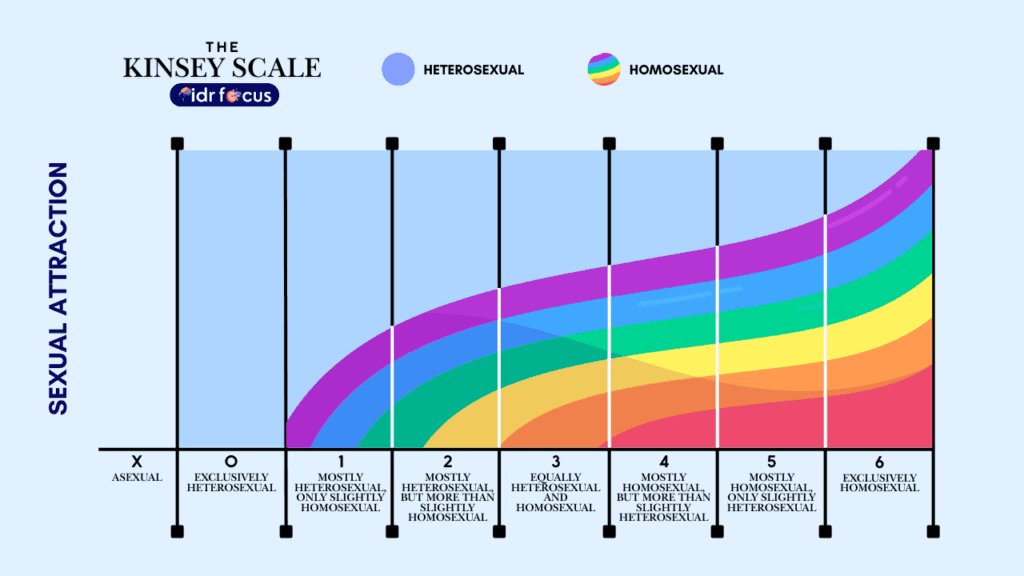
The Kinsey Scale, also known as the Kinsey Homosexual-Heterosexual Scale, is perhaps the most widely recognized sexuality test and represents one of the earliest systematic attempts to quantify sexual orientation on a continuum.
Developed by Alfred Kinsey, Wardell Pomeroy, and Clyde Martin, the Kinsey Scale was introduced in their influential publications "Sexual Behavior in the Human Male" (1948) and "Sexual Behavior in the Human Female" (1953).
Kinsey, often referred to as a sexual research revolutionary, challenged the binary view of sexuality by demonstrating that sexual orientation exists on a spectrum.
The scale uses a 0-6 rating system where:
- 0: Exclusively heterosexual
- 1: Predominantly heterosexual, only incidentally homosexual
- 2: Predominantly heterosexual, but more than incidentally homosexual
- 3: Equally heterosexual and homosexual
- 4: Predominantly homosexual, but more than incidentally heterosexual
- 5: Predominantly homosexual, only incidentally heterosexual
- 6: Exclusively homosexual
- X: No socio-sexual contacts or reactions (asexual)
How The Kinsey Scale Works And Its Weaknesses
The Kinsey Scale rates people based mostly on their sexual history. It also looks at interview answers, reactions to sexual stimuli, and other factors. The test checks both sexual actions and fantasies, assuming the gaps between categories are equal.
While it was a major step forward, the Kinsey Scale has been criticized for being too simple. It focuses only on a straight-gay line, ignoring other parts of sexuality. This limitation led to the creation of newer, more detailed scales that better capture the complexity of sexual orientation.
The Klein Sexual Orientation Grid (KSOG)
The Klein Sexual Orientation Grid offers a more nuanced approach to measuring sexual orientation by incorporating multiple variables and time dimensions. Introduced by Dr. Fritz Kleinin his book "The Bisexual Option," the KSOG was created to provide a more detailed and informative method for describing a person's sexual orientation. Klein recognized that sexuality encompasses more than just sexual behavior and attraction.
The KSOG examines seven variables:
- Sexual Attraction: To whom one is sexually attracted
- Sexual Behavior: With whom one has had sex
- Sexual Fantasies: Who appears in one's sexual fantasies
- Emotional Preference: With which gender does one prefer emotional connections
- Social Preference: With which gender one prefers to socialize
- Lifestyle Preference: The sexual identity of the people with whom one socializes
- Sexual Identity: How one identifies oneself
Each variable is evaluated across three time periods:
- Past: Life up to 12 months ago
- Present: The most recent 12 months
- Ideal: What one would eventually like
This creates a 21-cell grid (7 variables × 3 time periods) that provides a comprehensive picture of an individual's sexual orientation. Each cell receives a rating, resulting in a multifaceted profile rather than a single score.
Advantages
The KSOG addresses many limitations of earlier scales by recognizing that sexual orientation comprises multiple dimensions that can change over time. It acknowledges that a person's sexual behavior, fantasies, emotional connections, and identity might not always align perfectly, providing a more realistic representation of human sexuality.
The Storm's Sexuality Axis / Erotic Response And Orientation Scale (EROS)
The Storms Sexuality Axis model represents another significant advancement in the measurement of sexual orientation, particularly in its approach to bisexuality and asexuality. Developed by psychologist Michael Storms in 1981, this model was created to address problems with the Kinsey Scale's binary approach. Unlike previous researchers who positioned sexual orientation on a single continuum, Storms plotted homoerotic and heteroerotic motivations on a two-dimensional chart.
The Storms model uses:
- A horizontal axis measuring hetero-eroticism (low to high)
- A vertical axis measuring homo-eroticism (low to high)
This two-dimensional approach allows for a more accurate representation of bisexuality (high on both scales) and asexuality (low on both scales), which weren't adequately captured by one-dimensional models.
IDR Sexual Orientation Test

The IDR-SOT© (IDRlabs Sexual Orientation Test) is a modern implementation based on the Erotic Response and Orientation Scale. It measures heterosexual and homosexual behavior, bisexuality, and asexuality. While drawing on Storms' work, it's important to note that this test is the property of IDR Labs International and should not be confused with the original EROS.
The Storms model made significant contributions to the understanding of bisexuality by positioning it as an independent orientation rather than merely an intermediate point between heterosexuality and homosexuality. It also provided one of the first frameworks that adequately accounted for asexuality as a distinct orientation.
The Sell Assessment Of Sexual Orientation(SASO)
Though less detailed in the available information, the Sell Assessment offers another approach to measuring sexual orientation. The Sell Assessment uses six questions to evaluate the frequency and intensity of sexual attraction to men and women. This focus on both frequency and intensity provides nuance that single-dimension scales might miss. Unfortunately, more specific details about the scoring or interpretation of this assessment are not widely available.
Other Approaches And Spectrums
Beyond the major tests discussed above, researchers have developed various other methods for assessing sexuality.
Asexuality Spectrum Assessments
Recent research has expanded to better understand and measure the asexuality spectrum, which includes:
- Asexual: Lack of sexual attraction to others or low interest in sexual activity
- Aromantic: No interest in romantic relationships
- Graysexual/Grayromantic: Limited sexual or romantic attraction
- Demisexual/Demiromantic: Sexual attraction only after building an emotional bond
- Reciprosexual: Sexual or romantic attraction only when the other party shows attraction first
- Akiosexual(lithsexual): Sexual attraction that fades if reciprocated
- Aceflux/Aroflux: Fluctuating levels of asexuality or aromanticism
These categories reflect the growing recognition that asexuality, like other orientations, exists on a spectrum rather than as a single category.
Recent Research
Some researchers have developed new inventories with expanded question sets. One example is an 18-question inventory that examines attraction, behavior, and fantasies, resulting in Mean Sexual Orientation (MSO) scores distributed on a continuum. However, specific details about this assessment are limited.
The Circle Of Sexuality

In 1981, Dr. Dennis Dailey created a model called the Circle of Sexuality to help people understand the many connected parts of human sexuality. Instead of just looking at sex or having children, the model breaks sexuality into overlapping areas. Each area represents a different part of the sexual experience and identity. This approach is often used in teaching and counseling to encourage a positive and strengths-focused view of sexuality.
- Sensuality: Sensuality involves awareness and enjoyment of one’s own body and the bodies of others through the senses. It includes physical touch, body image, sexual fantasies, and the sexual response cycle. Sensuality highlights how physical sensations and pleasure connect us to ourselves and others.
- Intimacy: Intimacy is about emotional closeness and connection with others. It involves trust, caring, sharing feelings, vulnerability, and self-disclosure. Intimacy goes beyond physical contact to build meaningful relationships based on emotional bonds.
- Sexual Identity: Sexual identity refers to how individuals see themselves as sexual beings. It includes biological sex, gender identity, gender roles, and sexual orientation. Sexual identity shapes how people understand and express their sexuality and sense of self.
- Sexual Health and Reproduction: Sexual healthand reproduction cover knowledge and behaviors related to sexual well-being and reproduction. This area includes anatomy, contraception, prevention of sexually transmitted infections, and decisions about pregnancy. It emphasizes informed choices and maintaining physical well-being.
- Sexualization: Sexualization involves how sexuality is used to influence or control others. It includes flirting and seduction, but also harmful behaviors like harassment and coercion. Sexualization highlights the role of power, consent, and cultural influences in sexual interactions.
Are online sexual orientation tests accurate?
No online test for sexual orientation is completely reliable or accurate in every situation. However, we’ve spoken to many users of our gay and lesbian-related tests, and we believe the results can offer some helpful insights.
Understanding your sexual orientation isn’t just about having fun, impressing classmates, or gaining attention on social media. It’s a serious topic that plays an important role in helping people learn more about themselves. Taking steps to understand it can make the world a more accepting place for everyone.
Frequently Asked Questions
Are Sexuality Tests Scientifically Accurate?
While some tests, like the Kinsey Scale and EROS, are grounded in research, none are 100% foolproof. Results should be interpreted cautiously and supplemented with introspection.
Can Someone’s Sexual Orientation Change Over Time?
Yes, sexual orientation can evolve. Many people experience shifts in attraction, behavior, or identity throughout their lives.
Is There A “Best” Test For Discovering My Sexual Orientation?
There’s no universal “best” test, as each has its strengths and weaknesses. Combining multiple approaches often yields richer insights.
How Private Are These Tests?
Most reputable platforms ensure privacy, but always read the terms of service before proceeding. Avoid sharing sensitive information unless necessary.
Conclusion
Understanding your sexual orientation is a deeply personal journey, and sexuality tests can be valuable companions along the way. From the historic Kinsey Scale to modern interactive quizzes like ARealMe, these tools offer opportunities for reflection, discovery, and growth.
However, it’s essential to remember that no test can fully encapsulate the richness of human sexuality. Approach them with curiosity and openness, but don’t let them define you. If you’re ready to embark on this journey, why not start with one of the top sexuality tests mentioned here? Who knows, you might uncover something surprising about yourself.
See Also: Sex Health Advice From Celebrities